
_edited_p.png)
IMMERSIVE DESIGN THEORY - "UNBELIEVABLY BELIEVABLE".
Updated: Feb 10
The Silent Power of Realism in Immersive Design
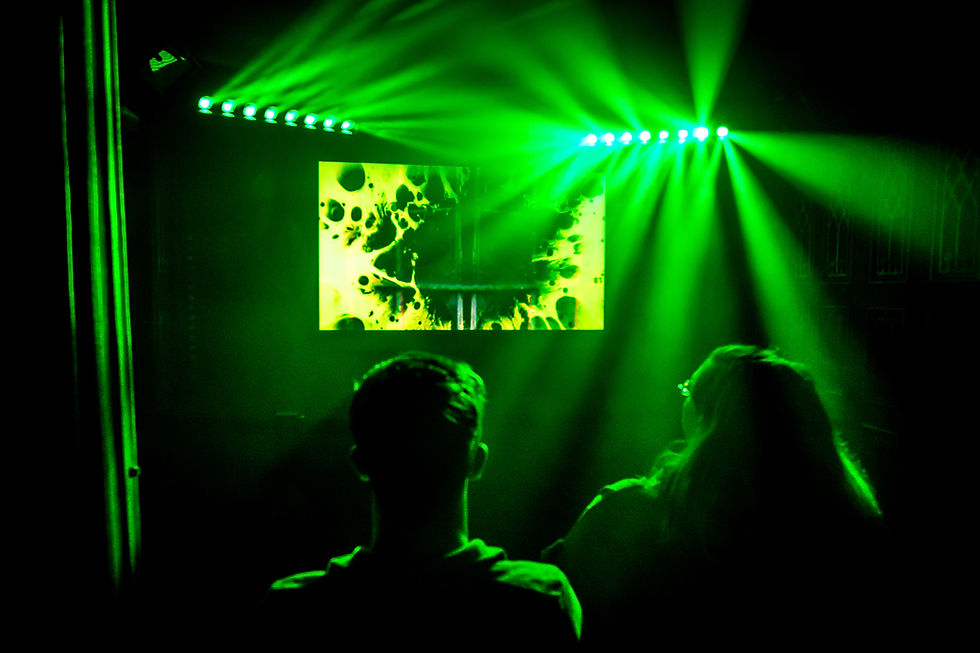
In immersive design, we often chase the spectacular, the dramatic lighting cues, the jaw-dropping special effects, the booming sounds and elaborate mechanics that make guests go “wow.” This kind of awe is loud, undeniable, and effective. It's rooted in the spectacular and feeds on scale and spectacle.
But there’s another kind of awe. One that doesn’t announce itself. One that sneaks in quietly and takes hold without fanfare. This is the awe of being Unbelievably Believable.
These are just two schools of thought on environmental design. Neither is right or wrong, better or worse. And they can co-exist. In fact, some of the best productions have taken the best of both worlds to bring their experience to life. It's just about knowing when an audience is in macro or micro mode, and tailoring design in those moments to make the most impact.
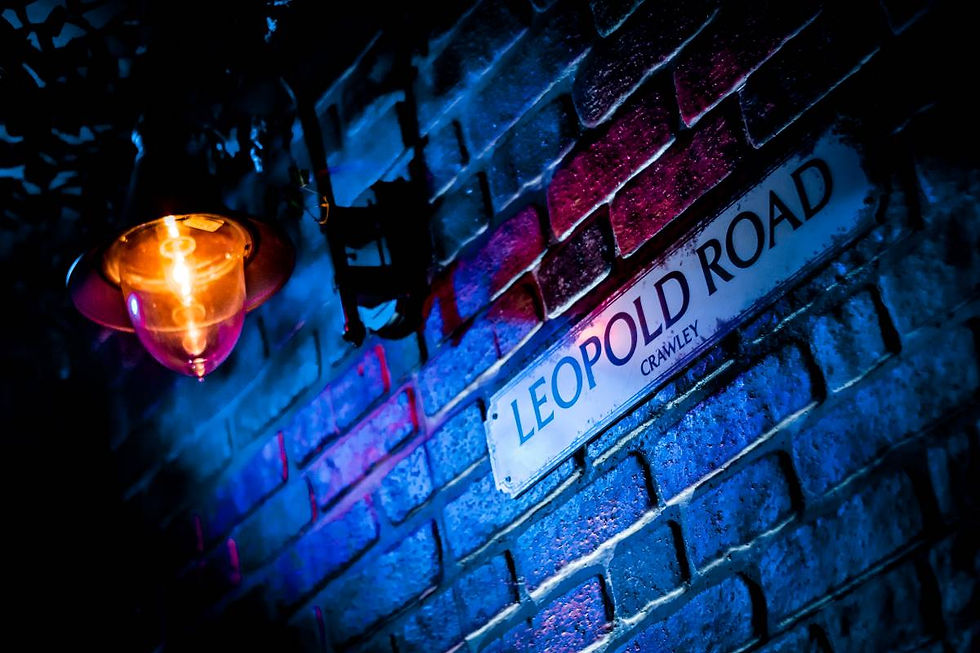
Awe Without the Spotlight
The Unbelievably Believable theory is centered around crafting immersive environments so convincingly real, guests forget to question them. These worlds don’t scream, “Look how clever this is!” or "Look at how many special effects we're using!"
Instead, they whisper “This is real.”
Some scenes will undoubtably call for the "showy" side of productions. A large hall, stage, arena, something more abstract. While others will benefit from a detail orientated approach that allows guests to sit with the intricacies, without the distractions of spectacle. This belongs in domestic spaces, small rooms, narrative heavy scenes that rely on a backstory, without the time or space to actually tell it.
While traditional awe relies on visible craft: fog cannons, animatronics, projection mapping. Instead this approach hinges on hiding the craft entirely. It’s about subtlety, restraint, and realism so refined it disappears. And when done right, the impact is profound, sometimes even more-so than the spectacle some guests might be expecting.
Realism: The Quiet Immersion Tool
Realism in immersive design is a double-edged sword. It lacks the overt razzle-dazzle that shouts “high production value,” and by its very nature, it’s often invisible. But that’s precisely the point.
Consider lighting, a prime example. In a naturalistic night time scene, the only visible source might be a single flickering street lamp. That lamp appears to be the sole illumination, but behind the scenes, there could be dozens of carefully rigged lights, each with different throws, colors, and intensities. Together, they create a cinematic scene with depth, contrast, and atmosphere, but the audience only notices the streetlight. The illusion holds. This isn't a scene that is full of visible spotlights and animated lighting cues. It's just... real.
Another example: a candlelit room. The key light is a tiny, flickering flame. But the illusion is supported by unseen fill lights, perhaps flickering in sync to the candle’s rhythm adding warmth and dimension. To the guest, the candle is doing all the work. In reality, it’s a silent ballet of controlled light.
Set dressing is another tool of realism that I personally love, both as a designer and a guest. Designing realism into a set doesn't have to mean a geographically accurate cave wall, or a scientifically accurate laboratory. Although researching these things ahead of time, and setting parameters to ensure a set isn't a total fantasy does certainly aid in the objective of realism, what I actually mean here is a living environment. Where walls wear the signs of life. A scuff from a struggle. A tack from a pinned poster. Dirt from historic use. Or a desk covered in details that tell a lifetime of stories through bills, letters, drawings and notes.
Allowing guests the time notice these set elements, to drink in a story on their own, can have a profound internal effect on their emotional journey through an experience.
This philosophy applies across all design disciplines:
Set dressing using real materials, aged surfaces, and layers of history.
Props carrying emotional weight, often through subtle wear and imperfection.
Sound design is textured, sparse, and never calls attention to itself.
Lighting is
Narrative becomes personal and intimate - believable drama over operatic stakes.
If They Don’t Notice It... Why Bother?
This is the core challenge, and strength, of Unbelievably Believable design. When realism is seamless, your guests may never consciously notice the work you’ve done. But I can guarantee they will feel it. Deeply. It forms a connection that sits on the other end of the emotional spectrum to awe. Through a careful dance across this spectrum, being careful not to bore, or overwhelm guests, you can manipulate them into a passive state where they don't just take in information, but actively seek it. If you've been rewarding their curiosity, then the hunger will remain, possibly even after the experience as they search up more lore or meaning. That's a perfect sign that they have left with a linguring feeling and deep connection, arguably an objective that any experience should be aiming for.
And the feedback will speak for itself. They won’t say, “The lighting was incredible,” or “The set design blew me away.”They’ll say:
“I genuinely believed I was there.”“It felt real.”“I forgot it was a show.”
That’s not a lack of recognition. It's one of the highest compliments a designer can receive.
Raising the Stakes Through Realism
This approach is especially potent for narrative-driven and agency-rich experiences. When the world feels real, so do the consequences.
Even the more mundane storylines can have drama injected into them. Maybe it’s not the apocalypse. Maybe it’s something smaller. A personal story. A quiet mission. A conversation that must happen.
When the environment supports realism, the emotional stakes soar. A missed message, a lost opportunity, a tiny failure... these can carry as much weight as saving the world. When the environment is telling that story alongside all the other narrative techniques that are employed, guests lean in. They care more about that person, place or thing. Not because anyone told them they should, but because they discovered the world it exists in, and made the decision themselves that it matters to them. And that care is the currency of true immersion.
Not Anti-Spectacle. Just Pro-Honesty
Don't get me wrong. This isn’t a dismissal of drama or effects. Flashy, showy design has its place, and it’s powerful. "More is more" is still my favourite technique, and style of experience. But I also know that not everyone is like me, and even I myself sometimes like to sit quietly and drink in a rich environment. Designing them is intricate and time consuming. But oh-so rewarding.
Unbelievably Believable offers an alternate path: one where awe comes from authenticity, and immersion stems from forgetting the fiction.
It’s harder to pull off. It requires trust in your audience, and an obsessive eye for detail. But the reward is an emotional resonance that lingers long after the lights go down.
Design for disbelief.
Make it feel lived in.
Make it feel real.
DESIGNING IMMERSIVE.
It's complicated, intricate and specialist. Koncept has it mastered.
An asset, ally and hidden superpower to creative teams and businesses. I am a specialist in writing and designing immersive attractions that stand out. As the mind behind some of the UKs most critically acclaimed experiences, Koncept Creative has a proven track record of transforming LBE and FEC business's ideas into fully realized, expertly written masterpieces that customers will pay to be immersed in.


Comments